
Cheese library


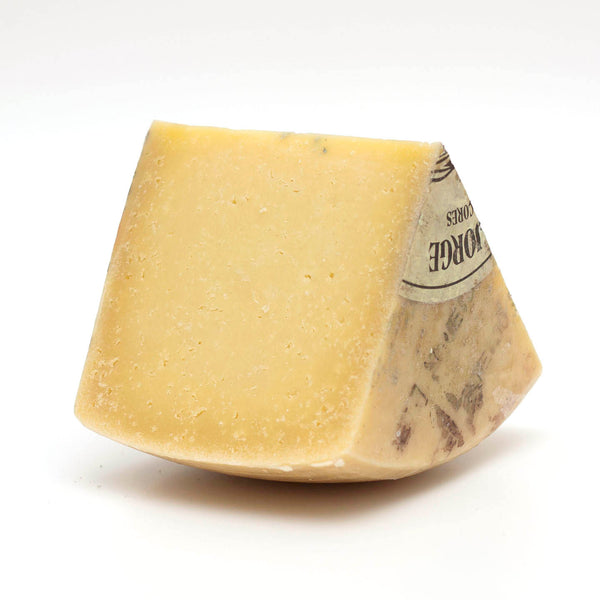
SÃO JORGE

SÃO JORGE
Azores, Unpasteurised Cow's Milk
One of the rare cow's milk cheeses of Portugal, from the beautiful island of São Jorge in the Atlantic archipelago of the Azores. On the island there is constant eighty-percent humidity, a volcanic soil composition, and a temperature between 12º and 25º C that is perfect for agriculture. The cheese has a lovely sharp nuttiness, redolent of cheddar, with a simmering undertone of the farm that extends the depth of flavour, and lends a persistent finish.
More About Portuguese Cheese


SELLES SUR CHER
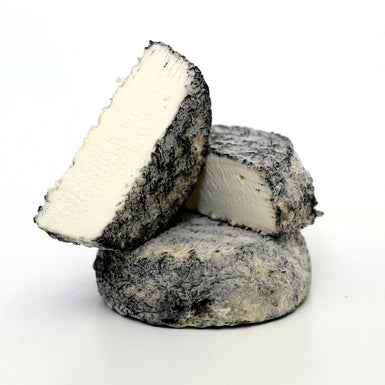
SELLES SUR CHER
LOIRE, UNPASTEURISED, TRADITIONAL RENNET
A small, close-textured disc coated in a dusting of charcoal ash, encouraging grey-blue moulds to form as it matures. The taste is similar to other cheeses of the region (notably the Sainte-Maure de Touraine, which is produced for us by the same cheesemaker), with floral notes that deepen into earthiness. The texture on the palate is silky, almost melting, with a persistent flavour that continues to develop long after the initial taste.
More About French Cheese - Buy Artisan French Cheese Online
The story of LA FROMAGERIE begins with a wheel of BEAUFORT CHALET D'ALPAGE; 27 years later and with over 100 French cheeses in our library, France is still an excellent place to start exploring cheese. In France, more so than possibly anywhere else, the variety of terroir - that magical combination of local terrain, altitude, soil and climate - accounts for the great diversity of the cheese. Some French cheeses are only sold locally, and many have their own distinctive characteristics; for instance, some are wrapped in leaves, while others are thickly coated in herbs, or washed in brine or alcohol. The names of many cheeses tie them to and can indicate the village or particular hill or mountain where they are made. From the caves of Combalou to the Mountains of Savoie, learn about the connection between place and product as you explore our selection of cheese from this fantastic country.

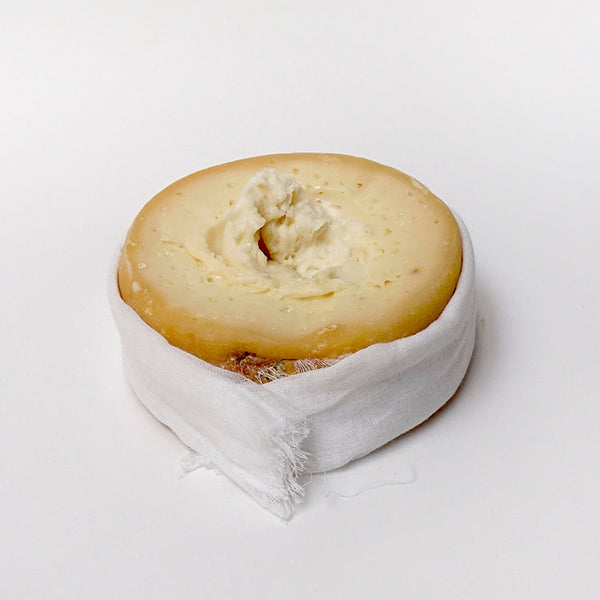
SERRA DA ESTRELA
SERRA DA ESTRELA
BEIRA, UNPASTEURISED, VEGETARIAN RENNET
An artisan-made mountain cheese coagulated with rennet extracted from the Cardoon plant (a wild thistle). This is not such a strange idea as the animals are grazing on pastures studded with wild herbs and flowers. The milk will separate into solid curds after about twenty minutes of exposure to the rennet, enough time for the plant to imbue its flavours – sharp, tangy, floral overtones give a delightful contrast to the smoothness of the curds. The rind is smooth and rubbed in oil before being wrapped in muslin to protect it from cracking, a practice we continue in our maturing rooms. Eaten in its younger stages with a spoon, after removing the upper rind, this mature version, though melting on the palate, can be sliced, and is markedly sharper and zestier.
More About Portuguese Cheese


SINODUN HILL
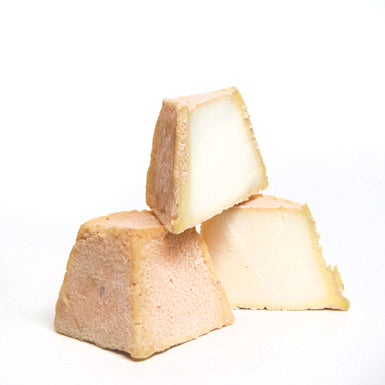
SINODUN HILL
Wales, Pasteurised Goat’s Milk, Vegetarian Rennet
Made by Fraser Norton & Rachel Yarrow from their own herd of pedigree Anglo Nubian goats & additional milk from another local herd. In the shape of a truncated pyramid with a nutty geotrichum rind. The pate has a mellow tangy flavour, with faint citrus notes. Aged for 21 days at the farm, we like to age it a further week in our fridges, tightening the rind & adding deeper complexity to the flavours.


SORMLANDS ADEL

SORMLANDS ADEL
JURSS DAIRY, SORMLANDS, SWEDEN.
Pasteurised Organic Cow's Milk. Traditional Rennet
This is a small scale dairy making a blue cheese along the lines of a Bleu d’Auvergne. The milk comes from two local farms – 5-6km from the dairy - with a third making up the quantity if there is a shortage of milk. The cows graze on pasture in the summer and in winter they go inside into large airy barns where they can freely walk around. On first tasting there is a lovely richness to the cheese with a defined blue ‘bite’ that opens into a sweetly nutty finish. The clean fresh taste is a lovely contrast, and alongside the Wrangebacksost hard cheese from Thomas Berglund will make a great pairing to showcase cheeses from this part of the Scandinavia Peninsula.


ST HELENA
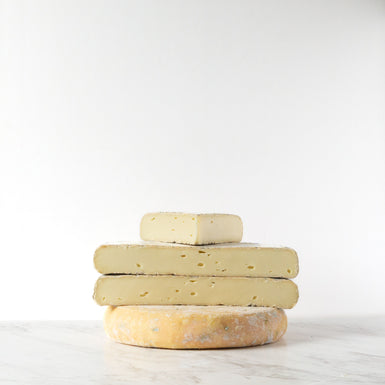
ST HELENA
BUNGAY, SUFFOLK, ENGLAND. UNPASTEURISED COW'S MILK. TRADITIONAL RENNET.
Blake Bowden has been working with Julie Cheyne at Whitewood Dairy since 2018 and developed this beautiful, delicate and approachable take on the Auvergne classic St. Nectaire. Using the raw milk from Fen Farm’s Montbéliarde cows and lightly washing the rind the gentle milky flavours ring true. The taste is mild, but so moreish offering fresh flower, grass, milky and creamy notes that lingers pleasantly. Uncooked and lightly pressed curds in the mould give this cheese a beautiful bouncy texture that is soft yet robust.


ST JUDE
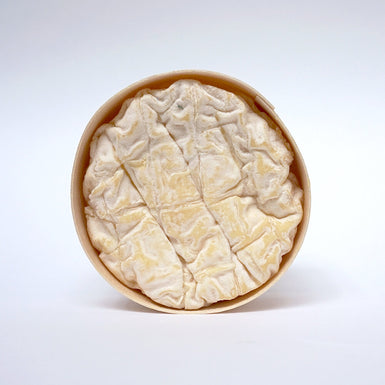
ST JUDE
Suffolk, Unpasteurised cow's milk, Traditional rennet
The milk is slowly & gently turned into curds with little intervention – simply lifting the curds & ladling into moulds, turning daily until ready for sale. The flavours of the pasture are intact giving the cheese an earthy richness becoming more evident as it ages.


STICHELTON
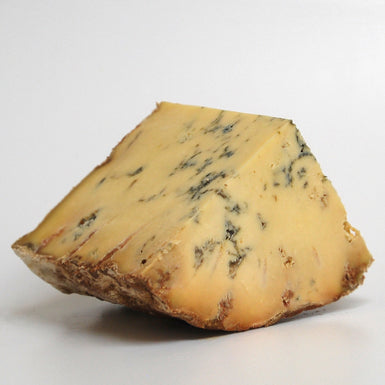
STICHELTON
WELLBECK ESTATE, NOTTINGHAM, UNPASTEURISED, TRADITIONAL RENNET
Joe Schneider is making his version of a very regional blue using milk from the estate and using very small quantities of starter and rennet. The slower process of hand-ladling the milk and the gentle maturation of two to three months before piercing instills the cheese with enormous complexity. It has a rich, dense and creamy paste and a delicately spiced blue, rather than an attack. Throughout the year the flavours can range from the sweet and vegetal to intensely meaty, with aromas like bacon fat. Tasting alongside the Colston Bassett Stilton you recognize this cheese has its own individual character and is not a Stilton, but a true original.


STINKING BISHOP
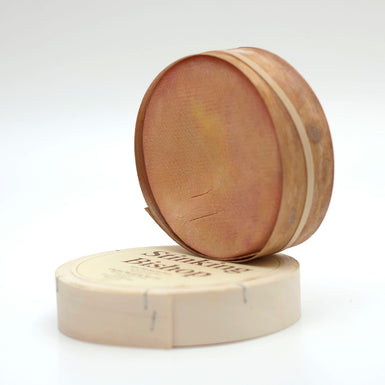
STINKING BISHOP
DYMOCK, GLOUCESTERSHIRE, PASTEURISED, VEGETARIAN RENNET
Encircled with a lath of beechwood, this soft melting cheese is washed in a perry from a variety of pear called Stinking Bishop (hence the name). Four decades ago Charles Martell, the cheesemaker, revitalised the Old Gloucester breed of cow (which was critically endangered) by beginning production of this cheese, and it has become one of the most identifiable British cheeses. Compared with an Epoisses or Vacherin Mont d'Or, the flavour is less strong than the nose, which – with proper maturing – can become quite pungent. A real original.


STONEBECK

STONEBECK
Nidderdale, North Yorkshire, Unpasteurised cow’s milk, Traditional rennet
A fascinating reinvention of an ancient recipe made by Sally and Andrew Hatton accessing an old recipe together with Mrs Peacock, a retired local cheesemaker. It has taken over 2 years to bring this cheese to more than the immediate local shops, and the Northern Dairy Shorthorn cattle produce a wonderfully fresh and grassy tasting cheese. Very limited supply but worth every bite.

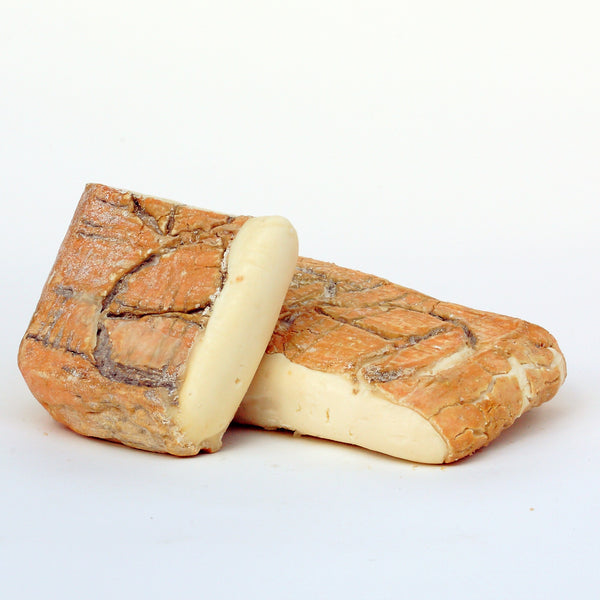
TALEGGIO DI VAL BREMBANA
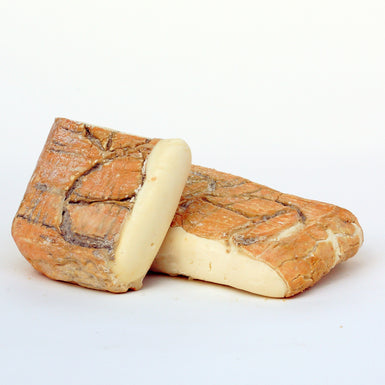
TALEGGIO DI VAL BREMBANA
Bergamo, Pasteurised Cow's Milk, Traditional Rennet
A Taleggio from the hills surrounding Bergamo. The texture is creamy, with a rich, melting quality that is not too salty, but has a lovely sappy floral flavour. In aged versions the rind develops a slight grit and the pate becomes almost runny, with a satisfying fresh-baked-bread depth – marrying well with firm, juicy cherries from Vignola near Modena, which have a tart, slightly sharp taste.
More About Italian Cheese


TEMPLEGALL
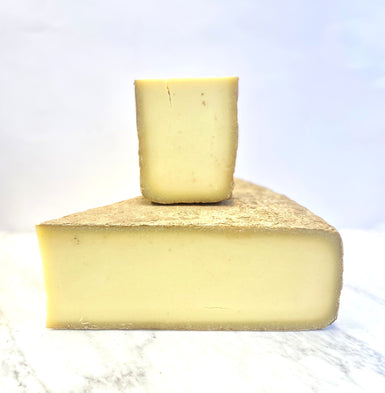
TEMPLEGALL
County Cork. Unpasteurised Cow's Milk.
Jean-Baptiste Enjelvin and the team at Heggarty’s have been producing this Alpine style cheese since 2016, with the closest comparison being a traditional Gruyere or Comte.
Sweet, nutty flavours mingled with fruit giving a delicate richness to the cheese, which pairs beautifully with white wines.
ALLERGEN: protein Lysozyme. EGG is part of the rind.
Click here for more information on allergens in our cheeses.
More About Irish Cheese

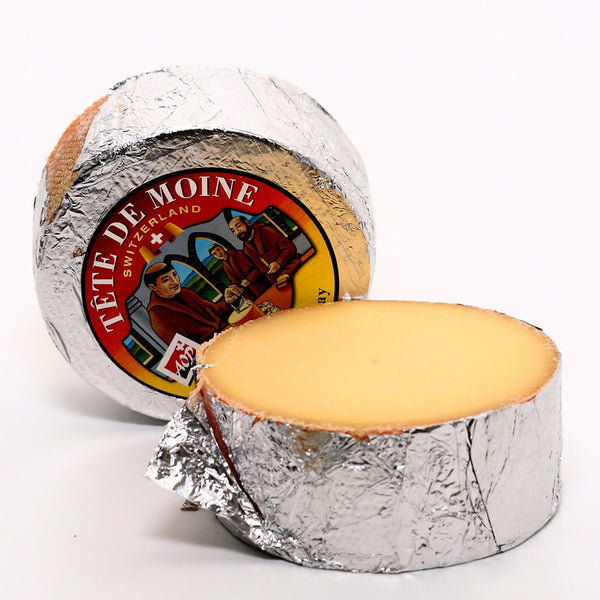
TETE DE MOINE

TETE DE MOINE
BERN. COW, UNPASTEURISED
Mentioned in texts from as far back as the twelfth century, this semi-hard cylinder-shaped cheese is matured on spruce planks with occasional brine washings. The pate is nutty and slightly fruity, made more pronounced by the use of a girolle machine. As the blade of the machine turns it produces delicate rosettes of cheese, creating more surface area and thus more taste. Wonderful when used for canapes, snacks or salads, it marries perfectly with dry white wines.
More About Swiss Cheese


TICKLEMORE
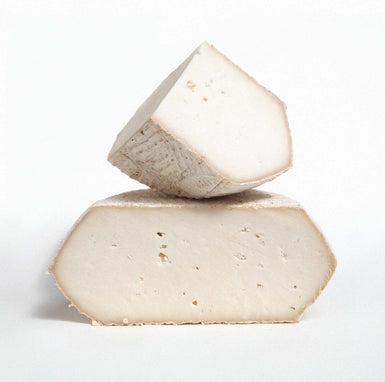
TICKLEMORE
Devon, Unpasteurised Goat's Milk
Originally made by Robin Congdon at the Ticklemore farm – where three of our blue cheeses come from – production was taken over in the early noughties by Debbie Mumford at the nearby Sharpham Dairy. The natural white blooms on the rind form during the maturing process after the cheese has formed in an oval basket. The flaky pate has tiny eyelet holes scattered throughout and the taste is fresh, light and gentle, with a predominant undertone of almonds pervading.


TOMA MACCAGNO

TOMA MACCAGNO
PIEDMONT, PASTEURISED COW, TRADITIONAL RENNET
From the Biella province to the north of the region close to Aosta, this is a typical rustic style traditional cheese with a pretty orange washed crust dotted with patches of grey & white bloomy moulds. The smooth textured semi-hard pâté is fruity & nutty to the taste with hints of smoky sweetness. A good cheeseboard choice.
More About Italian Cheese


TORTA DEL CASAR
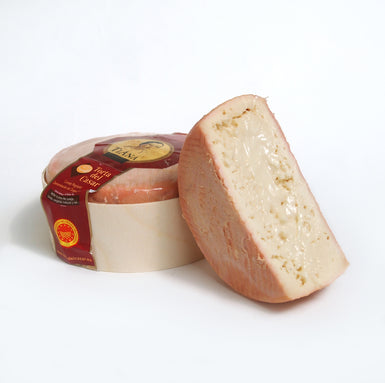
TORTA DEL CASAR
EXTREMADURA, PASTEURISED, VEGETABLE RENNET
An organic ewe’s milk cheese using Cardoon flowers (a wild thistle) as a coagulant. A delicate natural washed rind, peachy in colour from the light olive oil rub, the interior pate is soft and melting with a strong spicy aroma from the thistle. Made from the milk of the Merino and Entrefina breeds, the taste is salty and slightly bitter in a herbal bosky style – sweet and sour – to be enjoyed with a glass of dry, red wine with plenty of structure.
More About Spanish Cheese
Spain was slow to develop a modern approach to agriculture, and unfortunately the Civil and World Wars intervened up until the 1950s. Following this, changes started to happen, albeit slowly until 1975 when a more open attitude to farming and cheesemaking communities became possible. Hardship may have existed but the farmers and cheesemakers have held onto their cheesemaking traditions to produce such a diverse range of cheese throughout the country. In Spain the biggest rainfalls happen twice a year and the summers are exceedingly hot causing droughts - these extremes are reflected in the styles and flavours of the cheeses in tune with their terrain.
The northern and western coastal regions and valleys have cows grazing with some mixed farming, while the hills and mountain areas concentrate on goats and sheep. The cheeses from the northern regions are of differing textures and styles, while the more dry, arid and mountainous areas of the west and Canary Islands tend toward goat's and ewe's milk cheeses with strong, spicy flavours. From PICOS DE EUROPA from León to Catalonian GARROTXA to MANCHEGO from La Mancha, discover Spain's diverse range of cheese.
stock and availability
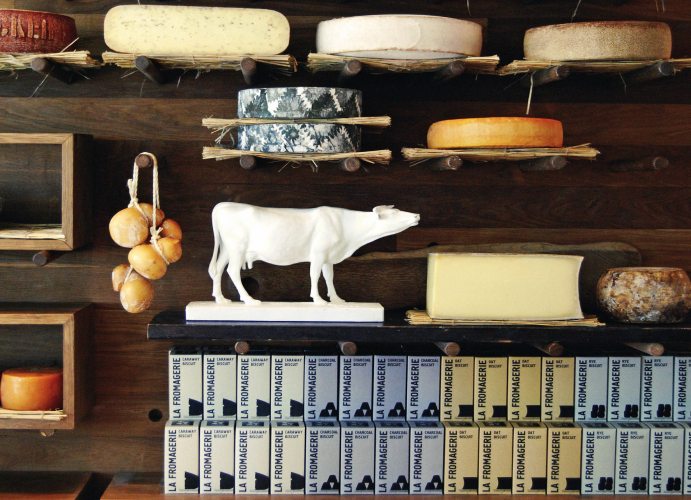
The cheese library showcases many artisan cheeses stocked in our cheeserooms throughout the year. Some of these cheeses may be unavailable online but available to purchase from your local LA FROMAGERIE. Please contact marylebone@lafromagerie.co.uk for information on stock and availability
